EcoKuku
Incubators Chicks Equipment Why Us Learning Hub 📅 Book a Farm Visit 📞 +254 710 905 696
Day-Old Chicks · Available Weekly

Rainbow Rooster Chicks for Sale in Kenya — Prices 2026

The colourful, adaptable dual-purpose breed widely favoured in Western Kenya and free-range farms. Rainbow Roosters are visually striking, easy to manage, and sell well in local markets where customers prefer traditional-looking birds.

150–200
Eggs per year
3–4 kg
Mature weight
12–14 wks
To market size
Dual-purpose
Meat + Eggs
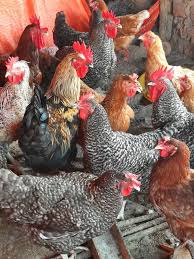
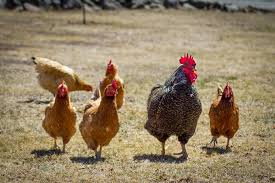
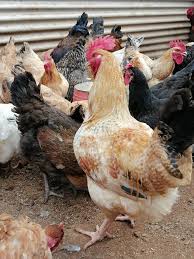
Mature Rainbow Rooster chicken Kenya — EcoKuku Farm Ltd
🐓
About the Rainbow Rooster Breed

Why free-range farmers choose Rainbow Rooster

The Rainbow Rooster is a colourful dual-purpose hybrid produced from coloured plumage parent stock. The breed gets its name from the varied and attractive colouring of its feathers — reds, browns, blacks and iridescent greens — which makes the birds visually appealing in local markets where customers associate coloured plumage with tastier, more natural chicken. Rainbow Roosters are hardy, adaptable to all Kenyan counties, and perform particularly well in Western Kenya where the breed has a strong following.

150–200
Eggs per Year
3–4 kg
Mature Weight
12–14 wks
To Market Size
Striking coloured plumage — commands attention in local markets
Hardy and adaptable across all Kenyan climates
Dual-purpose: good meat and 150–200 eggs/year
Excellent free-range performance
Popular in Western Kenya, Rift Valley and coastal markets
From certified EcoKuku parent stock
Current Prices — All Ages
1 Day OldKShs 110
1 Week OldKShs 150
1 Month OldKShs 300
2 Months OldKShs 550
3 Months OldKShs 700
📅 See Them on the Farm
Growth Timeline

Rainbow Rooster Growth Stages — What to Expect

Understanding each growth stage helps you feed, vaccinate and manage your birds correctly — which directly determines your profit.

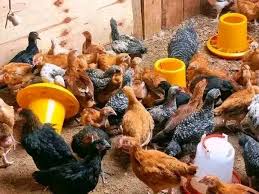
Rainbow Rooster chicks at 1 week old Kenya
Week 1–4 · Brooding Phase

Day-Old to 1 Month

Rainbow Rooster chicks are hardy in the brooder and easy for first-time farmers to manage. Follow standard protocol: 33°C at day 1, reducing 3°C per week. High-protein chick mash and clean water are essential. The breed tolerates temperature variation well but good brooding always improves survival rates.

Feed: Chick mash (18–20% protein)
Heat: 33°C week 1, reduce weekly
Vaccinate: Newcastle day 7, Gumboro week 3
Hardy breed — lower chick mortality than exotic birds
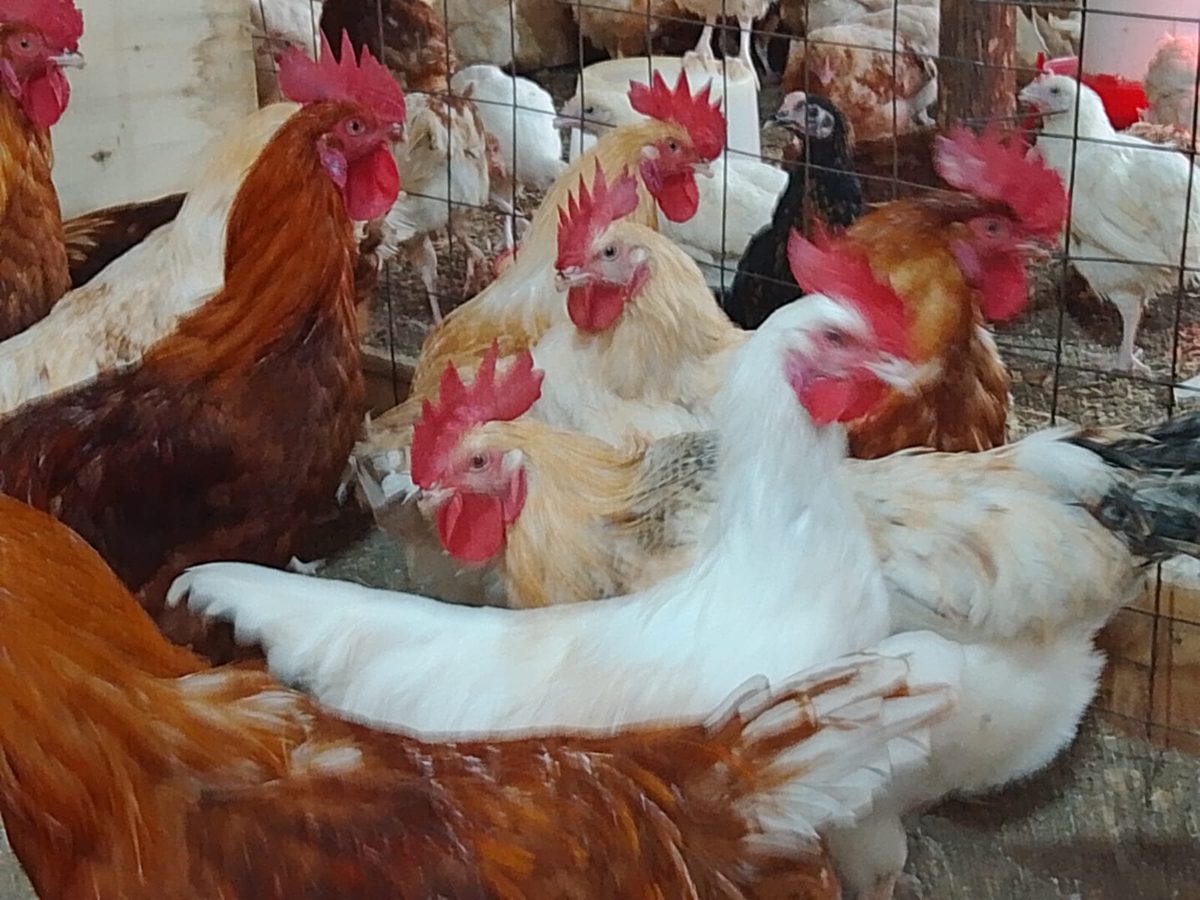
Rainbow Rooster chickens growing stage Kenya
Week 5–14 · Growing Phase

1 Month to Market Size

Rainbow Roosters develop their distinctive coloured plumage from week 4 onwards, making them increasingly attractive to buyers. Transition to growers mash at week 8. Birds reach market weight at 12–14 weeks. The coloured plumage and natural appearance means they consistently sell at a premium over plain white broilers in local markets.

Feed: Growers mash from week 8
Market weight 12–14 weeks (2.5–3.5 kg)
Coloured plumage develops from week 4
Premium pricing in local markets over white broilers
Point of lay hens — Month 5+ laying phase
Month 5+ · Laying Phase

Point of Lay to Full Production

Hens typically reach point of lay at 20–24 weeks. Once in production, ensure layers mash with adequate calcium for strong shells. Maintain 14 hours of light per day to sustain lay rates. Collect eggs twice daily to prevent brooding behaviour.

Feed: Layers mash with 3.5% calcium
Provide oyster shell or limestone grit
14 hours light maintains lay rate
Collect eggs twice daily
Common Questions

Rainbow Rooster FAQs — Answered

The questions we get asked most often about this breed — answered honestly.

Rainbow Rooster day-old chicks cost KShs 120 from EcoKuku Farm. Older chicks: KShs 300 at 1 month, KShs 550 at 2 months, KShs 700 at 3 months. Free delivery to all 47 counties included.
Rainbow Rooster is a coloured-plumage dual-purpose hybrid breed. Its name comes from the varied, attractive feather colouring — reds, browns, blacks and iridescent greens. The breed is popular in Kenyan local markets because customers associate coloured plumage with better taste and more natural chicken, compared to plain white commercial broilers.
Rainbow Rooster hens lay 150–200 eggs per year under good management — comparable to Kuroiler. They are dual-purpose birds: the surplus males are sold for meat and the females are retained for egg production.
Western Kenya markets strongly prefer coloured, naturally-raised chicken over white commercial broilers. Rainbow Roosters match this preference exactly — their striking plumage, natural growth and foraging behaviour appeal to buyers who want chicken that looks and tastes like traditional Kienyeji. They command higher prices per kg than white broilers in most Western Kenya markets.
Both are coloured, dual-purpose free-range breeds with similar performance stats (150–200 eggs/year, 3–4 kg mature weight). The key difference is plumage variety and market perception — Rainbow Roosters have more striking coloured feathers which gives them a market advantage in areas where customers choose by appearance. Kuroiler is slightly more established across all regions of Kenya.
Consumer preference in Western Kenya, Nyanza, Rift Valley and Coast regions strongly favours colourful birds over plain-coloured breeds. Buyers in these markets associate multicolour plumage with authentic free-range chickens — which they prefer for taste and cultural reasons. Rainbow Roosters sell faster at market days, attract higher bids, and often sell out before other breeds. This regional preference is a genuine competitive advantage for farmers in these counties that is not available to Nairobi-area farmers who mostly sell to buyers with different preferences.
No — they are distinct breeds. Both are dual-purpose free-range adapted breeds, but Rainbow Rooster has multicolour plumage (red, black, brown, gold) while Kuroiler is typically uniform in colour. Rainbow Roosters tend to reach a slightly lower mature weight (2.5–3.5 kg) than Kuroiler (3–4 kg) and have similar egg production (150–200/year). The key difference is market positioning — Rainbow Roosters command colour premiums in specific regional markets that Kuroiler does not. In Nairobi, they are largely interchangeable; in Western Kenya, Rainbow Rooster is the clearly superior commercial choice.
From EcoKuku Farm Ltd: Day-old (1 day) KShs 110. Day-old (2 days) KShs 150. 1-month-old KShs 300. 2-months-old KShs 550. 3-months-old KShs 700. All prices include free delivery to all 47 counties. Call +254 710 905 696 to check availability and reserve your batch.
In upcountry markets (Western Kenya, Rift Valley, Nyanza, Coast), Rainbow Roosters sell for KShs 600–900 per live bird at 12–16 weeks. In Nairobi, they sell for KShs 500–750. Market-day prices fluctuate with season — prices peak before major holidays (Christmas, Easter, national holidays) by 20–40%. Farmers who time their batches to reach slaughter weight just before peak demand periods significantly improve their margins.
In-Depth Guide

Everything You Need to Know About Rainbow Rooster Farming in Kenya

Breed Background

What Is the Rainbow Rooster?

The Rainbow Rooster (also called Rainbow Chicken or Kuchi) is a colourful dual-purpose breed developed for free-range systems in Africa and Asia. Its distinctive multicolour plumage — combining red, black, brown and gold — creates strong consumer preference in markets where buyers associate colour diversity with authentic free-range birds. In Western Kenya, Rift Valley and Coast regions, Rainbow Roosters sell faster and at higher prices than plain-coloured breeds.

Market Performance

Why Rainbow Roosters Sell Fast in Kenya

Strong brand preference in Western Kenya, Rift Valley, Coast
Consumers pay 20–40% premium over plain-coloured birds
Market days in upcountry towns sell out within hours
Colourful plumage signals free-range to the buyer immediately
Growing demand in Nairobi as urban consumers seek "real chicken"
Growth and Feeding

Raising Rainbow Roosters to Market

Mature weight: 2.5–3.5 kg at 12–16 weeks
Weeks 1–4: Chick mash 20% protein — 15–25g/bird/day
Weeks 5–10: Growers mash — 60–90g/bird/day
Week 10–16: Finisher or growers continued — 100–120g/bird/day
Free-range foraging cuts feed cost 30–40%
Profitability

Rainbow Rooster Income in Kenya

100 birds × 90% survival = 90 birds to market
Selling price: KShs 600–900/bird live weight (upcountry markets)
Eggs: 150–200/year × KShs 15 = KShs 2,250–3,000/hen/year
Best system: Free-range with night shelter + foraging during day
Works well alongside other farm activities — low labour model
🌈
Rainbow Rooster regional advantage: If you farm in Western Kenya, Rift Valley, Nyanza or Coast, the Rainbow Rooster has a built-in market advantage that Kuroiler and Kari do not. Regional consumer preference is a real competitive moat — buyers come looking specifically for the colourful bird and pay more for it. This breed is underutilised by Nairobi-centric farming advice that defaults to Kuroiler for everything.
Other Breeds

Compare all our breeds

Not sure this is the right breed for your farm? Compare with our other options.

Free Guides

Learn more in our Learning Hub

Detailed guides on hatching, feeding, vaccination schedules, profitability calculations and breed comparisons — all free, no sign-up required.

Ready to order Rainbow Rooster chicks?

The market favourite in Western Kenya and free-range farms. Call to reserve your batch.