EcoKuku
Incubators Chicks Equipment Why Us Learning Hub 📅 Book a Farm Visit 📞 +254 710 905 696
Free Resource · No Sign-Up Required

EcoKuku Learning Hub

Everything a Kenyan poultry farmer needs to know — from picking the right breed to cutting feed costs, setting up a brooder correctly, and vaccinating your flock. Written from real farm experience, not textbooks.

🐓 Breeds 🥚 Incubators 🔥 Brooders 🌾 Feeding 💉 Vaccination 📊 Profit ❓ FAQ
Guide 01 — Choosing a Breed

Which Chicken Breed is Best for Kenya?

The breed you choose determines your income ceiling. Here is an honest comparison of all four breeds we sell and raise ourselves — no fluff, just the numbers that matter.

FeatureKariKuroilerSassoRainbow
Eggs per yearUp to 280150–200120–160150–200
Mature weight2–2.5 kg3–4 kg3.5–5 kg2.5–3.5 kg
Time to slaughter5–6 months10–12 weeks12–16 weeks12–16 weeks
Best farming systemSemi-intensiveFree-rangeSemi-intensiveFree-range
Disease resistanceHighVery HighMediumHigh
Best marketEgg incomeBalanced dual-purposePremium meatWestern Kenya
Day-old priceKShs 120 all breeds · View all ages and prices
Kari Improved Kienyeji chicken Kenya
Best for: Maximum Eggs

Kari Improved Kienyeji

Developed by the Kenya Agricultural Research Institute specifically for Kenyan conditions. Up to 280 eggs per year while retaining the Kienyeji's natural hardiness. If egg income is your primary goal, this is your breed — it out-lays every other locally adapted breed in Kenya.

Up to 280 eggs per year — highest of all hardy breeds
Thrives on local and foraged feeds
High natural disease resistance
Developed by KARI for Kenyan farming conditions
Kuroiler chicken Kenya
Best for: Free-Range Hardiness

Kuroiler

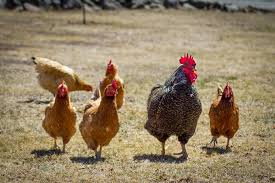
Kenya's most popular smallholder breed. Crossed from indigenous stock for East African village conditions — it forages aggressively, resists local diseases, and delivers dual income without expensive commercial feeds. Roosters reach market weight in 10–12 weeks. The best breed for beginners.

150–200 eggs per year
Best free-range performance of all four breeds
Fastest to slaughter weight among hardy breeds
Tolerates Kenya's variable climate across all counties
Sasso chicken Kenya
Best for: Premium Meat Markets

Sasso

A French dual-purpose breed dominating Kenyan high-value markets — restaurants, supermarkets and butcheries pay a premium for its flavourful, firm-textured meat. Grows heavier than Kuroiler and Kari. If your market is Nairobi restaurants or urban butcheries, Sasso is your highest-earning breed.

3.5–5 kg mature weight — heaviest of the four breeds
Superior meat flavour commands premium pricing
Restaurants pay KShs 800–1,200 per Sasso bird
Good egg production alongside meat income
Rainbow Rooster chicken Kenya
Best for: Western Kenya Markets

Rainbow Rooster

A colourful dual-purpose breed with exceptionally strong demand in Western Kenya, Rift Valley and Coast regions. Consumers in these markets pay significant premiums for the appearance and flavour of Rainbow birds over commercial broilers. Hardy, adaptable, and consistently profitable in the right markets.

150–200 eggs per year
Strong consumer preference in upcountry markets
Excellent adaptability across all of Kenya's climates
Dual income: eggs and premium-priced meat
💡
EcoKuku's honest recommendation: If you are starting out, buy Kuroiler. They forgive beginners' mistakes, survive power cuts and feed shortages, and still deliver income. Once you have 2–3 successful batches, experiment with Kari for egg income or Sasso for meat premiums.
Commercial Breeds

Commercial Layers & Broilers — For Serious Production

These breeds are not for backyard keeping. They are engineered for maximum output in controlled environments. High returns, but they require precise management.

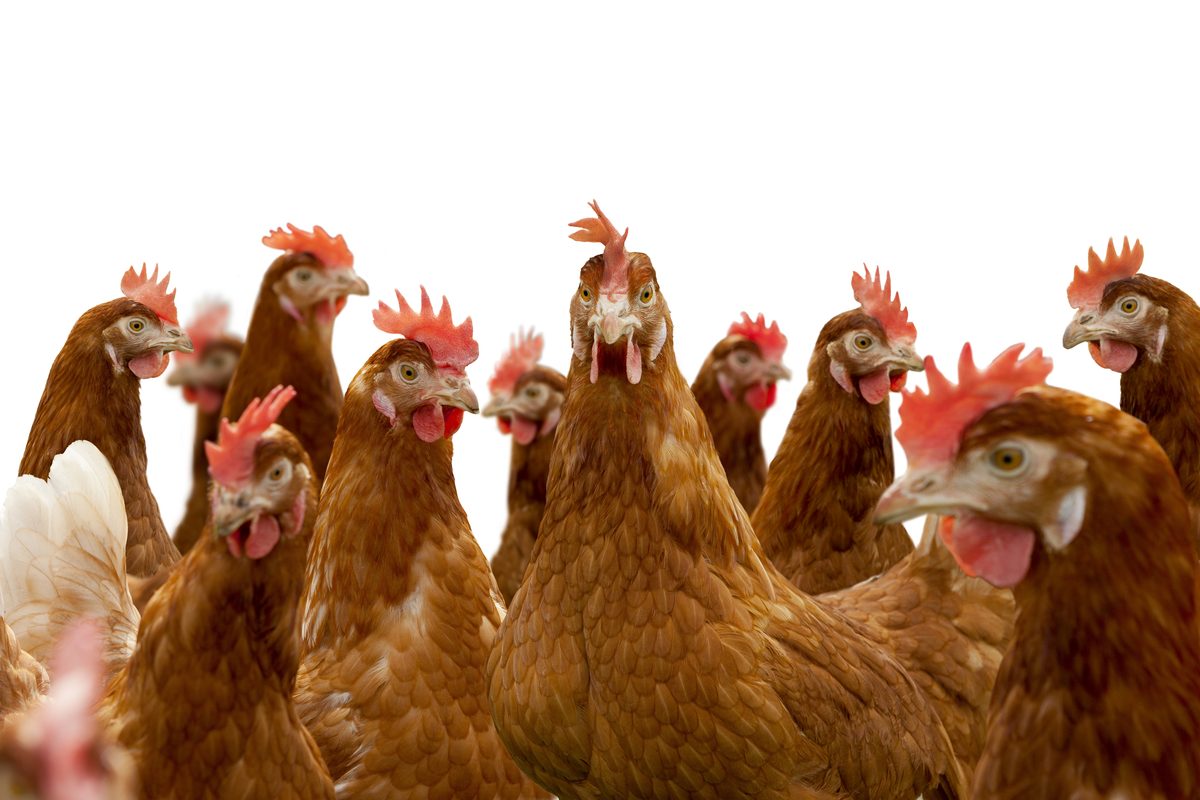
Isa Brown commercial layer hens Kenya
Commercial Layer · Cage System

Isa Brown — 300 to 320 Eggs Per Year

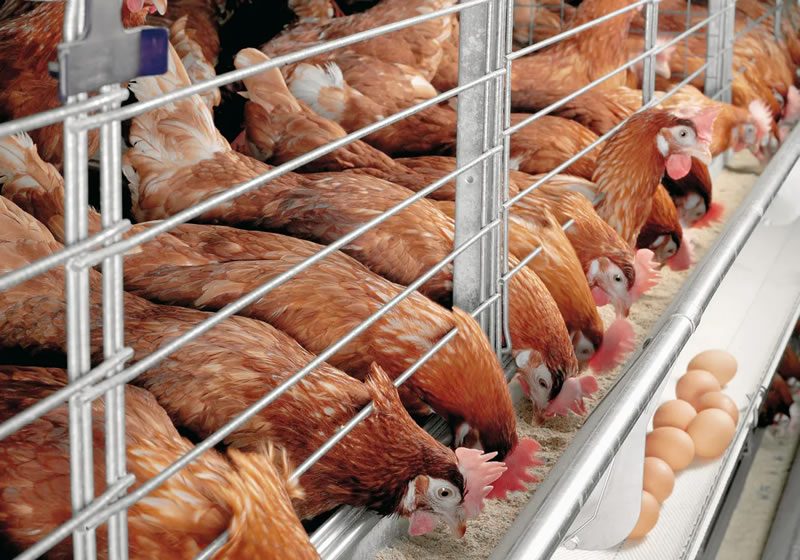
The Isa Brown is the world's most productive egg-laying breed. Developed in France, it is the standard bird used in commercial egg farms across Kenya and globally. Under good management — battery cage, automatic water, layers mash, and 14–16 hours of controlled light — an Isa Brown hen produces 300 to 320 eggs per year. That is nearly one egg per day for her entire laying life of roughly 72–80 weeks. The eggs are large and brown with excellent shell strength. She is not hardy, she is not a forager — she is a precision machine that rewards correct management with exceptional output. Run the numbers: 128 hens at 300 eggs each is 38,400 eggs per year. At KShs 15 per egg wholesale, that is KShs 576,000 from a single A-type battery cage. The cage pays for itself many times over.

300–320 eggs per year — highest production of any breed
Starts laying at 18–20 weeks
Requires battery cage and controlled lighting
Layers mash 16–18% protein + 3.5% calcium throughout lay
14–16 hours light per day via timer — non-negotiable

Isinya commercial layer hens Kenya
Commercial Layer · Kenya-Adapted

Isinya — 280 to 300 Eggs, Heat Tolerant

The Isinya is Kenya's locally-adapted commercial layer — developed to perform close to Isa Brown levels in East African conditions. It lays 280–300 eggs per year and handles heat better than Isa Brown, making it the better choice for farms in hot regions (Coast, Rift Valley lowlands, poorly ventilated houses) or semi-intensive floor systems where natural ventilation is variable. If you are in Nairobi or highlands with a well-built house, Isa Brown will outperform Isinya slightly on egg numbers. If you are in a hot area or do not yet have reliable mechanical ventilation, Isinya is the safer investment. Both breeds need the same management: layers mash, controlled light, and consistent water supply.

280–300 eggs per year — near-commercial performance
Better heat tolerance than Isa Brown
Works in cage or semi-intensive floor systems
Starts laying at 20–22 weeks
Developed for East African farming conditions
Commercial broiler chickens Kenya
Commercial Broiler · Meat Production

Commercial Broiler — Market Weight in 6 Weeks

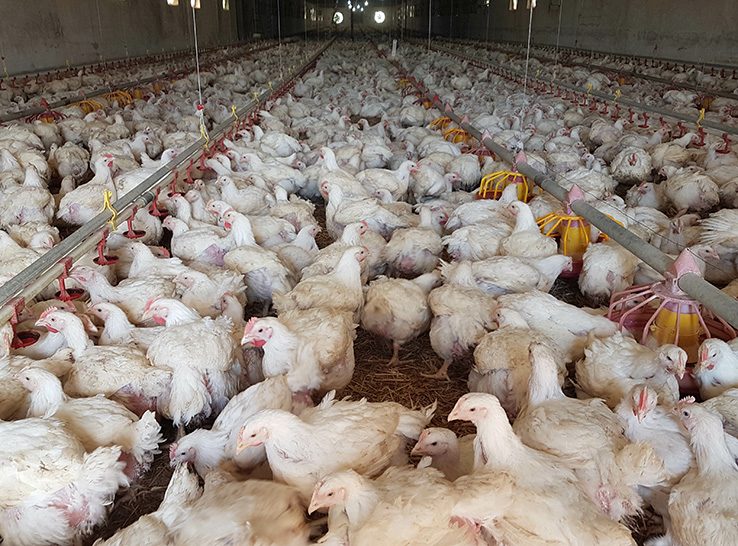
Commercial broilers are purpose-bred for one thing: converting feed into meat as fast as possible. A well-managed broiler reaches 2–2.5kg live weight at 6 weeks. That speed is what makes broiler farming attractive — you can run 8 cycles per year from the same house. The feed conversion ratio (FCR) of a commercial broiler is 1.8–2.0, meaning it takes 1.8–2.0kg of feed to produce 1kg of live weight. Compare this to Kuroiler at 2.5–3.0 FCR or indigenous kienyeji at 4.0+ — commercial broilers are significantly more efficient per kilogram of meat produced. The trade-off is management intensity: broilers require broiler starter mash (23–24% protein), then finisher mash (20% protein) from week 3, precise brooding temperatures in week 1–2, and good ventilation from week 3 onward. Get these right and your profitability is predictable. Get them wrong and your FCR climbs, your market weight disappoints, and your margins collapse. Broiler farming at 100 birds is a learning cycle. At 500+ birds it becomes a serious income stream.

2–2.5kg live weight at 6 weeks
FCR 1.8–2.0 — most feed-efficient breed
8 cycles per year possible from the same house
Broiler starter 23–24% protein weeks 1–3
Broiler finisher 20% protein weeks 3–6
Broiler cages eliminate litter disease — recommended
Which Breed
For Your Farm?
Quick decision guide
Decision Guide

Choosing the Right Breed

Use this to match your situation to the right bird. Want eggs and have battery cages plus controlled lighting: Isa Brown. Want eggs but farming in a hot climate or semi-intensive system: Isinya. Want fast meat turnover with 6-week cycles and have feed capital: Commercial Broiler. Want eggs and meat with minimal inputs in free-range or semi-intensive: Kuroiler. Want maximum eggs locally-adapted, no cage required: Kari Improved Kienyeji. Want premium meat for hotels and restaurants: Sasso. Want colourful dual-purpose birds for Western Kenya or coastal markets: Rainbow Rooster. The mistake most farmers make is choosing Isa Brown or broilers before they have the infrastructure — housing, cages, reliable feed supply, water system — to support high-performance birds. Start with what your infrastructure can support, then upgrade as your operation grows.

Max eggs in cage system → Isa Brown
Eggs in hot climate or semi-intensive → Isinya
Fast meat, 6-week cycles → Commercial Broiler
Eggs + meat, free-range → Kuroiler or Kari
Battery Cages

A-type, H-type & Broiler Cages — What Every Farmer Should Know

A battery cage is not just a piece of equipment — it is a production system. The cage you choose determines your bird density, ventilation requirements, labour input, and profitability per square metre.

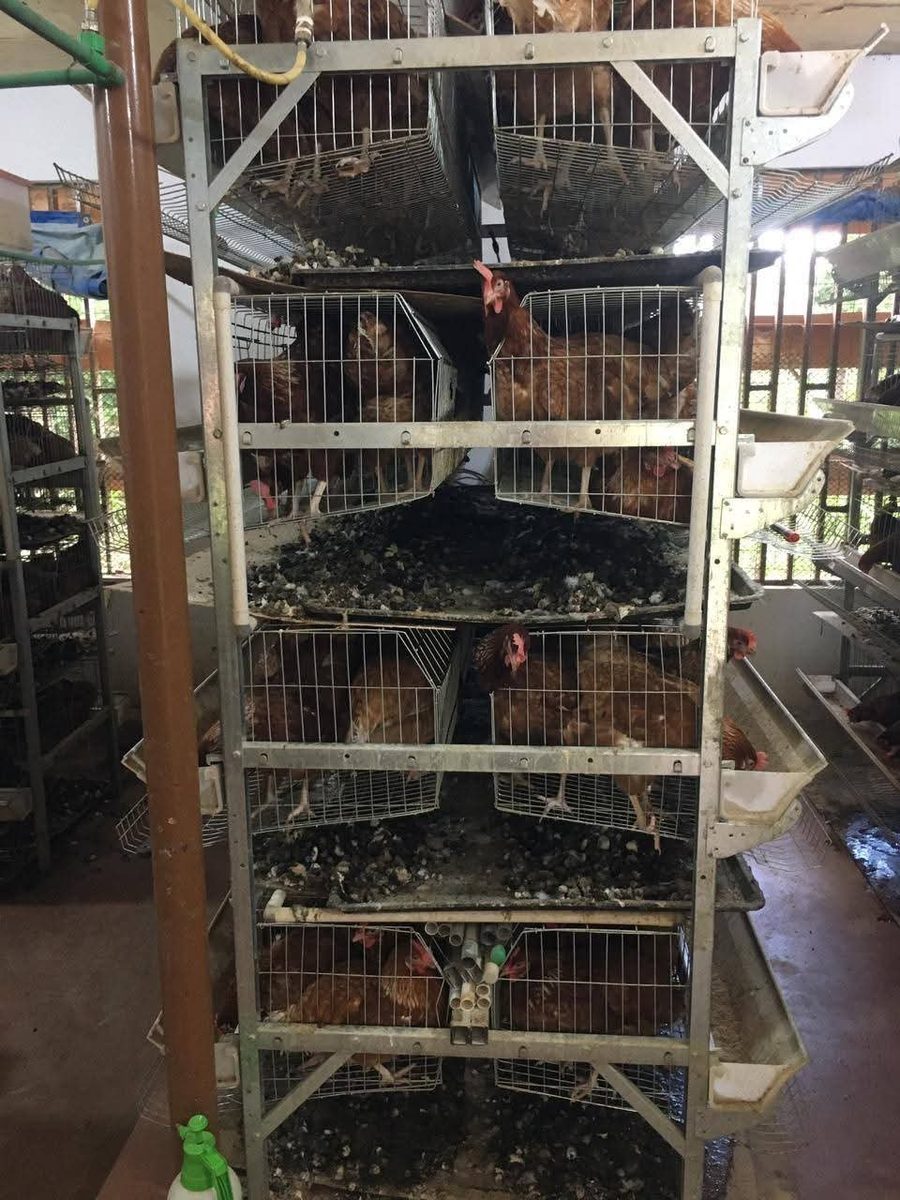
A-type battery cage for layers Kenya
Layer Cage · 128 Hens · KShs 38,000

A-type Battery Cage

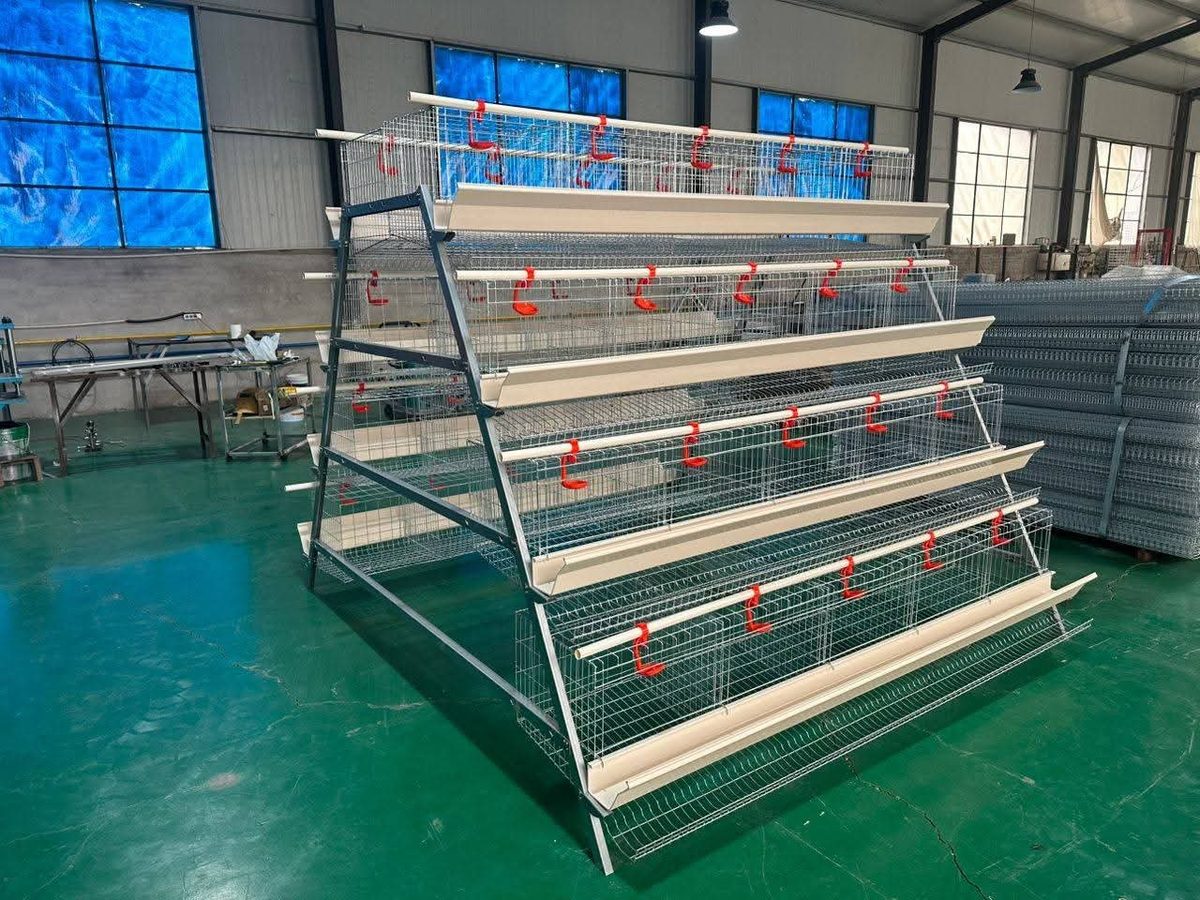
The A-type is Kenya's most widely used layer cage. The stepped pyramid design means each tier is set back from the one below — this allows natural air flow around every bird and prevents droppings from falling onto the tier below. It is the easiest cage to manage: you can access every bird easily, spot a sick hen quickly, and collect eggs without crouching under tight spaces. Dimensions are 7 feet long, 8 feet wide, and 8 feet high. It holds 128 hens at 4 per compartment across 4 tiers. For an open-sided Kenyan poultry house with natural cross-ventilation, this is the correct cage. At KShs 38,000 with free installation, it is the best value cage for most Kenyan commercial layer farmers.

128 hens · 4 per compartment · 4 tiers
Natural ventilation — no fans required
Automatic water system + nipple drinkers
High-quality PVC feeding trays included
Rust-proof galvanized steel — 10+ year lifespan
H-type battery cage for layers Kenya
Layer Cage · 128 Hens · KShs 48,000

H-type Battery Cage

The H-type stacks all 4 tiers vertically in a flat column — at only 4 feet wide, it takes up half the floor space of an A-type while housing the same 128 birds. This makes it the right choice when you are maximising bird density in a limited house footprint. The trade-off is ventilation: the vertical column design traps heat and ammonia more than the A-type, so you need fans or very good cross-ventilation. It also has manure-collecting trays on each tier, which keeps the house cleaner and reduces ammonia in well-ventilated setups. If you have a properly ventilated enclosed house and want to pack in more birds per square metre, the H-type is the more efficient configuration.

Same 128 hens in half the floor width (4 feet)
Manure collecting trays on each tier
Requires mechanical ventilation or strong cross-breeze
Best for enclosed, fan-ventilated houses
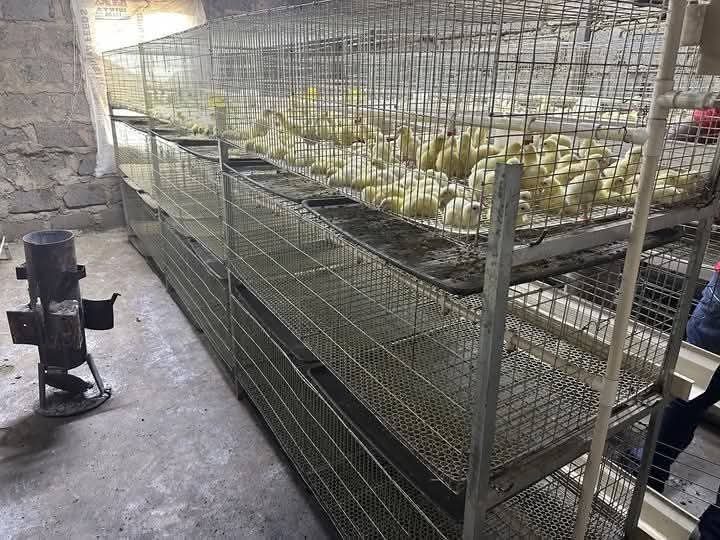
Broiler cage Kenya 72-80 birds
Broiler Cage · 72–80 Birds · KShs 30,000

Broiler Battery Cage

Most Kenyan farmers still raise broilers on deep litter — sawdust on the floor. The problem: wet litter from drinker spillage causes coccidiosis, ammonia builds up, and birds fight for feeder space causing uneven growth. The broiler cage solves all of this. Birds live on wire mesh — droppings fall through onto trays below. No wet floor means no coccidiosis. Nipple drinkers eliminate water spillage. Every bird has equal access to feed and water, so growth is uniform. The result is a better FCR, lower medication cost, and more consistent slaughter weight. At 72–80 birds per cage at KShs 30,000, the cage pays for itself in the first 6-week cycle from feed savings and medication costs avoided.

72–80 broilers · wire mesh floor
Eliminates coccidiosis from wet litter
Uniform growth — every bird accesses feed equally
Pays for itself in first cycle through savings
🏠
Free installation on all cage orders. Our team delivers and installs the cage at your farm. Call +254 710 905 696 to order or get advice on which cage suits your setup. View full cage details and comparison →
Guide 02 — Incubators

How to Choose the Right Incubator

An incubator is the heart of any hatchery. Sizing wrong is one of the most expensive mistakes new farmers make — too small and you outgrow it in 3 months, too large and you run it half-empty for years.

How It Works

The 21-Day Hatching Process

Fertilized eggs hatch in 21 days. The incubator holds a constant 37.5°C temperature and 55–65% humidity, turning eggs automatically every 2 hours during days 1–18. On day 19 (lockdown), turning stops and humidity rises to 70% until hatch.

Days 1–18: 37.5°C, humidity 55–60%, auto-turning
Days 19–21: Lockdown — 70% humidity, no turning
Never open during lockdown — kills humidity instantly
Candle eggs at day 7 to check fertility
Sizing Guide

Which Incubator Size Do You Need?

Match the incubator to your realistic egg supply and market — not your ambition. Running a smaller machine at 80% capacity is more profitable than a large one at 30%.

Personal use / starter: 64–128 eggs — KShs 16,500–25,000
Small commercial hatchery: 136–204 eggs — KShs 28,000–35,000
County-level supply: 352–528 eggs — KShs 55,000–65,000
Large commercial: 1,056–2,112 eggs — KShs 85,000–130,000
AC/DC Explained

Why Solar and Grid Power Matters in Kenya

All EcoKuku incubators run on both mains electricity (AC) and 12V solar/battery (DC). A 3-hour power cut during lockdown can destroy an entire batch. AC/DC eliminates this risk with seamless automatic switchover — no manual intervention needed.

Automatic switchover — no action needed during outage
Protects against Kenya Power interruptions
Works in fully off-grid locations
Included as standard — no extra cost
Why Hatches Fail

Common Mistakes to Avoid

Most failed hatches are caused by avoidable human errors, not faulty machines. These are the mistakes we see most often from new hatchery owners.

Opening during lockdown — destroys humidity, kills hatch rate
Infertile eggs — always source from certified parent stock
Wrong humidity — check water channels every day
Poor ventilation — incubator needs fresh air flow
Old eggs — hatch within 7 days of collection for best results
Guide 03 — Brooding

How to Keep Day-Old Chicks Warm and Alive

More chicks die in the first two weeks than at any other stage — and almost all of those deaths are caused by cold, not disease. Getting brooder setup right is the single highest-return investment you can make.

Temperature Schedule

Week-by-Week Heat Guide

Temperature management changes every week. Watch the chicks, not just the thermometer. Huddling means too cold. Scattered against walls means too hot. Spread evenly and calm means correct temperature.

Week 1: 33–35°C directly under the brooder
Week 2: 30–32°C
Week 3: 27–29°C
Week 4: 24–26°C
Week 5 onwards: No artificial heat needed
Gas vs Electric vs Traditional

Choosing Your Heat Source

Gas brooder: 500–2,000 chicks, works through power cuts — KShs 10,000–18,500
Infrared bulb: 50–200 chicks with stable power — KShs 1,000
Brooding coil: Under 200 chicks, plug-and-play — KShs 1,000
Clay pot / jiko: Off-grid areas, charcoal-powered — KShs 1,000–13,000
Pen Setup

Brooding Pen Setup for Day-Old Chicks

Space: 50 chicks per square metre in week 1
Use a circular guard ring to prevent corner crowding
Line the floor with 5–7 cm of wood shavings
Block all draughts — wind is more dangerous than cold
Place water and feed within 30 cm reach from day 1
⚠️
Most common brooding mistake in Kenya: Farmers switch off the brooder at night to save electricity. Night temperatures drop sharply — especially in highlands and cold months. Chilled chicks develop respiratory infections that kill them over the next week. Never turn off the brooder at night during the first 3 weeks.
Guide 04 — Feeding

How to Feed Your Flock Without Breaking the Bank

Feed accounts for 60–70% of the total cost of raising poultry in Kenya. Every farmer who makes good money does so partly by managing feed cost intelligently. Here is exactly how to do it.

What to Feed at Each Stage

Correct Ration by Growth Phase

Feeding the wrong ration at the wrong stage is expensive — you either stunt growth or waste high-protein feed on birds that no longer need it.

Weeks 1–4 (Chicks): Chick mash — 20% protein minimum
Weeks 5–8 (Growers): Growers mash — 16–18% protein
Week 8 to slaughter (Finisher): 14–16% protein
Laying hens (Layers): 16% protein + 3.5% calcium
Always provide clean water — birds drink 2× what they eat
Home-Mix Formula

Make Your Own Growers Ration

This formula reduces feed cost by 30–50% versus buying commercial bags. Requires a feed shredder to process the dry maize component.

60% dry maize (shredded) — main energy source
25% sunflower seed cake — protein source
10% fish meal or omena — high-protein top-up
5% mineral and vitamin premix — essential micro-nutrients
Add limestone or oyster shell grit for laying hens
5 Ways to Cut Feed Costs

Proven Cost-Reduction Strategies

1. Home-mix your ration — saves 30–50% immediately
2. Free-range your flock — insects replace 30–40% of feed
3. Add a feed chopper to supplement with napier grass
4. Use a feed shredder to process your own dry maize
5. Use correct feeders — wrong type wastes 20–30% of all feed
Water Systems

Why Clean Water Is Not Optional

Contaminated water is the leading cause of Gumboro and Newcastle flare-ups on Kenyan farms. The right drinker system prevents disease transmission and labour costs simultaneously.

Nipple drinkers: Most hygienic, zero spillage — from KShs 100/unit
Bell drinkers: Auto-fill, near-zero daily labour — KShs 1,500–2,000
Tube drinkers: Good starter option, manual refill — from KShs 250
Disinfect all water systems monthly
Guide 05 — Vaccination

Vaccination Schedule for Kenyan Poultry

A single Newcastle outbreak can kill your entire flock in 72 hours. Vaccination is the cheapest insurance in poultry farming. This is the schedule we use and recommend for all four breeds.

AgeVaccineDiseaseMethodNotes
Day 1Marek'sMarek's DiseaseInjection (hatchery)Commercial flocks only
Day 7ND-LasotaNewcastle DiseaseEye dropCold-chain vaccine — do not use in water
Day 14IBD (Gumboro)Gumboro DiseaseDrinking waterWithhold water 2 hrs before dosing
Day 21IBD BoosterGumboro DiseaseDrinking waterUse clean unmedicated water
Day 28ND-Lasota BoosterNewcastle DiseaseEye drop or waterRepeat every 4–6 weeks ongoing
Week 6Fowl TyphoidFowl TyphoidInjectionRecommended for commercial flocks
OngoingNewcastleNewcastle DiseaseDrinking waterEvery 4–6 weeks throughout flock life
❄️
Cold chain is everything. A vaccine stored above 8°C is dead — and a dead vaccine does nothing. Always buy from a certified vet supplier. Transport in a cool box with ice. Administer within 2 hours of opening. Never vaccinate sick or stressed birds.
Guide 06 — Profitability

Can You Make Money from Poultry Farming in Kenya?

Yes — but the numbers have to work before you start. Here is a realistic breakdown for a small 128-egg hatchery operation in 2026.

Start-Up Costs

128-Egg Hatchery Setup

128-egg AC/DC incubator — KShs 25,000
Gas brooder (1,000 birds) — KShs 14,500
Feeders and drinkers for 100 chicks — KShs 4,000
First batch fertilized eggs (5 trays) — KShs 4,250
Chick mash for first month — KShs 2,500
Vaccines and medicines — KShs 1,500
Total start-up: approximately KShs 51,750
Revenue Per Cycle

Returns from One 21-Day Hatch

128 eggs set × 75% fertility = ~96 fertile eggs
96 fertile × 85% hatch rate = ~82 live chicks
Sell day-old: 82 × KShs 120 = KShs 9,840
Or raise to 1 month: 80 × KShs 300 = KShs 24,000
Minus eggs cost (KShs 4,250) and feed (KShs 2,500)
Net profit per cycle (1-month sell): ~KShs 17,250
Payback Period

When Do You Break Even?

With 2 staggered hatch cycles per month, you earn approximately KShs 34,500 per month net. Your KShs 51,750 investment pays back in under 2 months. From month 3, it is pure profit.

2 cycles/month = KShs 34,500/month net
Break-even: under 2 months
Monthly profit from month 3: KShs 30,000+
Scale-up: add a 2nd incubator to double output at low marginal cost
📊
Use our live profit calculator on the homepage to adjust these numbers for your flock size, feed cost and local selling price. It updates in real time. Go to calculator →
Guide 07 — Common Questions

Poultry Farming FAQs — Answered Honestly

The questions our customers ask us most often. Answered directly, without filler.

It depends on your market and system. Kari gives the most eggs (up to 280/year) so wins on egg income in semi-intensive setups. Sasso gives the most money per bird in premium meat markets — restaurants pay KShs 800–1,200 per bird versus KShs 400–600 for standard birds. Kuroiler gives the best balance in free-range smallholder systems. Rainbow Rooster wins in Western Kenya and Rift Valley where consumers pay premiums for colourful free-range birds.
A realistic minimum for a viable small operation: 128-egg incubator KShs 25,000 · gas brooder KShs 14,500 · feeders and drinkers KShs 4,000 · first batch fertilized eggs KShs 4,250 · chick mash and vaccines KShs 4,000. Total approximately KShs 51,750. This produces 80–90 chicks per cycle and pays back in under 2 months at 2 cycles per month.
Four proven options: Gas brooder using LPG — KShs 10,000–18,500, best for 500–2,000 birds, most reliable. Clay brooding pot — KShs 13,000, charcoal-powered, excellent heat retention for off-grid areas. Brooding jiko — KShs 1,000–2,000, charcoal or wood, practical for 50–500 chicks. Infrared bulb on a solar battery — KShs 1,000 for the bulb plus a small solar setup. For commercial operations, the gas brooder is the right answer.
Core schedule: Newcastle (ND-Lasota) at day 7 by eye drop. Gumboro at day 14 in drinking water. Gumboro booster at day 21. Newcastle booster at day 28. Then Newcastle every 4–6 weeks for the flock's life. Commercial flocks add Fowl Typhoid at week 6 and Marek's at day 1 (hatchery-administered). Always use cold-chain vaccines from a certified vet supplier.
Five approaches that work: Home-mix your ration — 60% dry maize + 25% sunflower cake + 10% omena + 5% premix cuts costs 30–50%. Free-range your flock — insects and greens replace 30–40% of commercial feed for Kuroiler and Kari. Add a feed chopper for napier grass supplementation. Use a feed shredder to process your own dry maize on-farm. Use the correct feeders — wrong feeder design wastes 20–30% of all feed through spillage.
A chaff cutter (animal feed chopper) cuts fresh or semi-dry green material — napier grass, maize stalks, hay — into short uniform pieces for use as a green fodder supplement. A feed shredder processes dry materials — dry maize, sunflower husks, crop residues — into coarse meal that forms the base of home-mixed rations. Most serious farms eventually use both.
Match size to your realistic egg supply and market. Personal or starter: 64–128 eggs (KShs 16,500–25,000). Small local hatchery: 136–204 eggs (KShs 28,000–35,000). County-level supply: 352–528 eggs (KShs 55,000–65,000). Large commercial: 1,056–2,112 eggs (KShs 85,000–130,000). All EcoKuku incubators are AC/DC (solar and grid) and include free delivery and training countrywide.
A well-managed Kari hen lays up to 280 eggs per year — far above the 40–60 of indigenous Kienyeji and the 150–200 of Kuroiler. To achieve this: feed layers mash with 16–18% protein, maintain 14 hours of light per day, provide oyster shell grit for shell quality, and collect eggs twice daily to discourage broodiness.
Ready to Start?

Book a free farm visit — see everything in person

Come to our Nairobi farm. See incubators running, meet the chick breeds, talk to our team. No obligation. Free.

Site Map

© 2025 EcoKuku Farm Ltd · Nairobi, Kenya · +254 710 905 696 · Privacy Policy